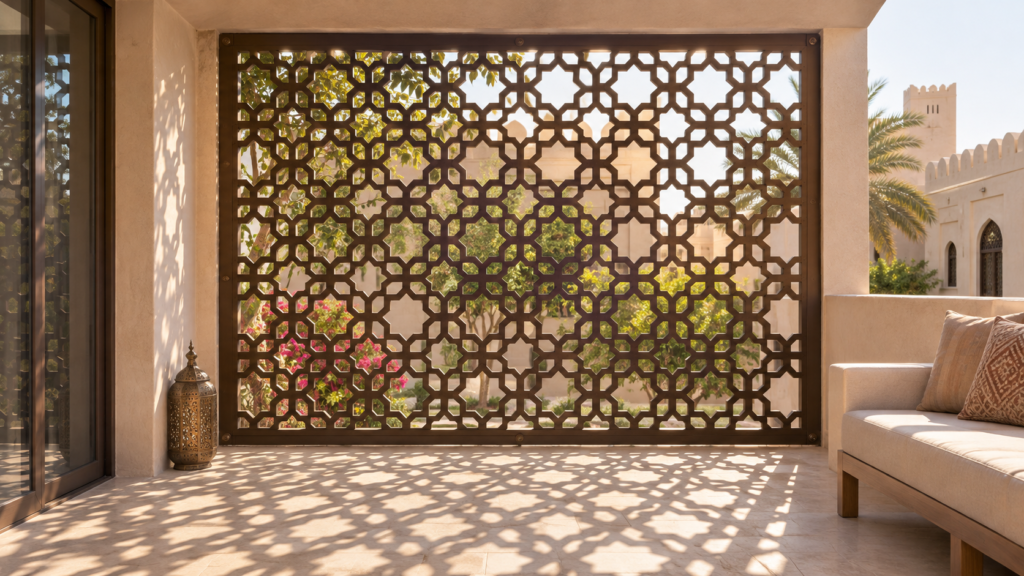
A mashrabiya pattern can look private when you hold a sample straight in front of you and still leave a clear view into the courtyard once it’s installed. The same screen may shade a balcony at noon while letting the late-afternoon sun reach the chairs. Before choosing how open a CNC-cut aluminium screen should be, check it from the places people will actually look from and at the times they’ll use the space.
Where Does the Mashrabiya Pattern Need to Block the View?
Start by deciding what you want to screen. At a villa entrance, it might be the seating area just inside the gate. On a balcony, it could be the view from an adjacent building. Stand at the gate, on the pavement or at the side of the driveway and look towards that part of the space. Check the view from inside as well, particularly if occupants want to keep a view of the garden.
If evening privacy matters, hold the sample at the proposed height and turn on the lights behind it. The difference between a bright interior and a dark exterior can make details behind the screen easier to see. Ask someone to stand or sit where occupants normally would while you check the view from outside.
How Much Afternoon Sun Should the Screen Let Through?
Visit the balcony or terrace around the time people normally use it. If the sun reaches the seating area late in the day, take a photo and mark where you want the shade to fall. A screen can cast a shadow across the floor and still leave the seats exposed if it sits too far to one side or the sun comes in at an angle.
If the screen will sit in front of a window, look from inside too. A pattern with smaller openings may reduce glare, but it can also cut daylight you want to keep. Compare patterns in the proposed position before approving one. For background on exterior shading, see the U.S. Department of Energy’s guide to energy-efficient window coverings.
What Should You Look for in a Full-Scale Sample?
Ask for a section of the mashrabiya pattern cut at the proposed size. Hold it next to the stonework or window frames, then step back to the distance from which people will usually see it. Small cut-outs that look distinct on a drawing can blend together from across the street. A sample also helps you judge how much of the background remains visible.
If the façade will use several panels, review the drawing that shows how they meet. Ask where the joints will fall and how the pattern will end at each frame. Agree on those details before fabrication, especially where the screen lines up with a window or turns a corner. Explore Glass Solutions’ architectural products.
Which Finish and Fixings Suit the Location?
Compare a physical finish sample beside the window frames, stone or render. Look at it in sunlight and shade, since the same colour can read differently across a large panel. For a site near the coast, tell the fabricator how exposed the opening is and ask what finish and fixings they propose for the panel and frame.
Show the installer where the screen can be fixed. If there’s a window behind it, check that the sash can open fully and the handle stays within reach. Leave access to clean the back of the screen and the glass behind it.
What Should the Contractor Send for a Quote?
A site photo and a marked-up drawing can help the fabricator understand what the screen needs to do. Include:
- The approximate width and height of the opening.
- The views you want to screen and the areas you want to shade.
- A reference image or sketch of the pattern you like.
- The location of windows and doors that need to open.
- Any finish requirements and details about exposure to coastal air.
If you’re a contractor looking for a subcontractor to fabricate CNC-cut aluminium mashrabiya panels for a villa or commercial façade in Muscat, send your drawings to Glass Solutions. The team can review the pattern, finish and mounting details with you before fabrication.